
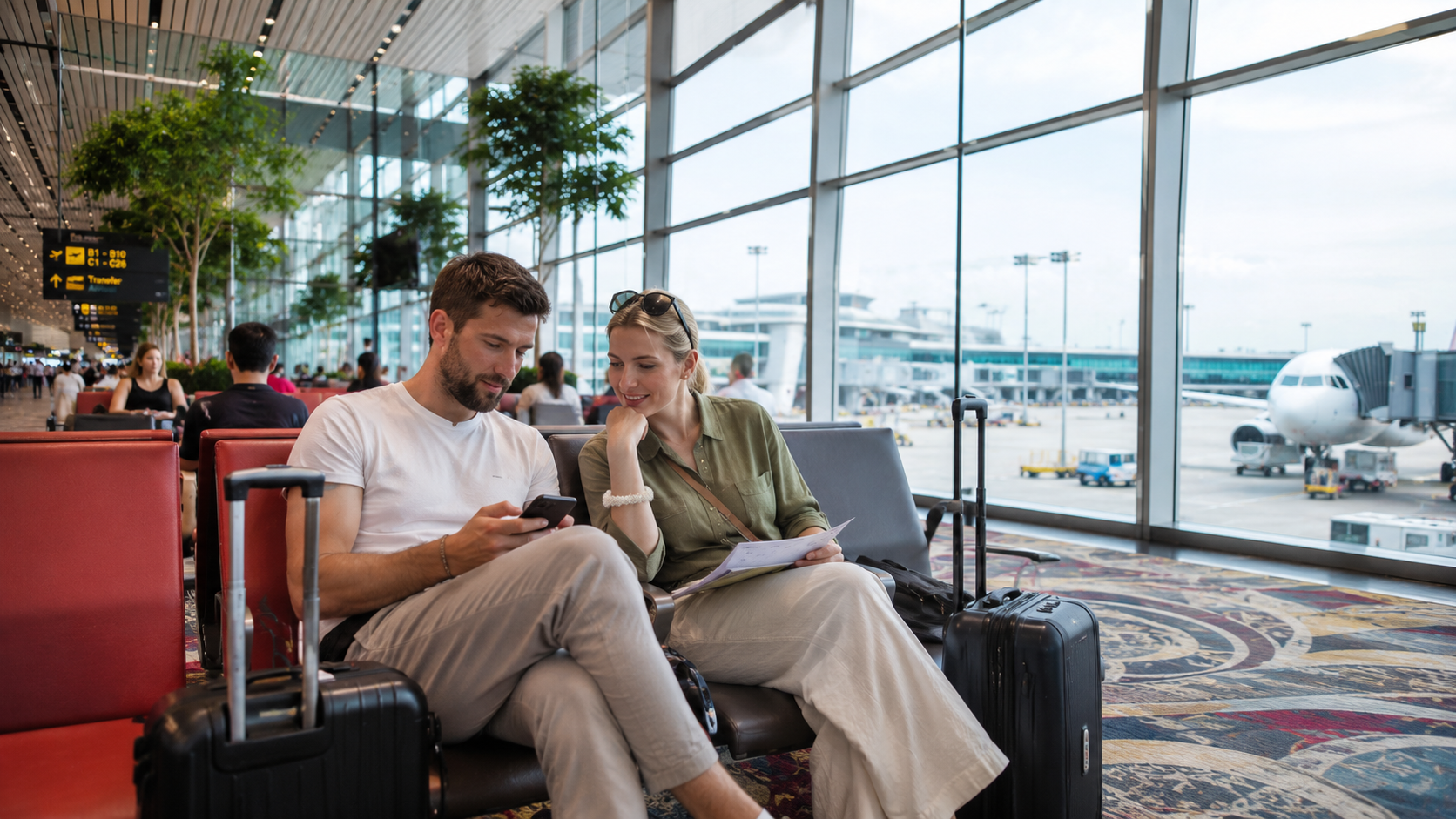
Singapore is one of Asia’s major international aviation hubs, connecting travellers from Australia, East Asia and other parts of the world with destinations across the region.
Flying to Sri Lanka via Singapore can be a convenient option for travellers who cannot find a suitable nonstop flight from their departure city.
1. Can You Fly Directly From Singapore to Sri Lanka?
Yes. Nonstop flights operate between Singapore Changi Airport (SIN) and Bandaranaike International Airport (CMB), Sri Lanka’s main international airport.
Singapore Airlines operates regular nonstop services between the two cities.
The flight generally takes approximately 3 hours and 45 minutes, although actual journey times depend on the service, weather and air traffic.
2. Why Choose Singapore as a Connecting Airport?
Singapore Changi Airport is an important connecting hub for international passengers.
Travellers arriving from cities such as Sydney, Brisbane, Tokyo or other Asian destinations may find convenient onward connections to Colombo.
One advantage is the opportunity to book an itinerary that connects multiple flights through the same airport.
3. How Much Layover Time Should You Allow?
For flights booked on one ticket, airlines normally provide connections that meet the airport’s applicable minimum connection requirements.
However, a connection that is technically permitted may still feel rushed if the incoming flight is delayed.
A layover of around two to three hours can provide a more comfortable buffer for many travellers.
4. Do You Need a Singapore Transit Visa?
Travellers who remain within Changi Airport’s international transit area generally do not need to enter Singapore.
This can happen when travelling on separate tickets, collecting checked baggage or obtaining an onward boarding pass at a landside check-in counter.
In these circumstances, Singapore’s entry requirements apply, including visa requirements for relevant nationalities.
5. Will Your Checked Baggage Go Directly to Colombo?
Baggage arrangements depend on how the flights are booked and whether the airlines have suitable baggage-transfer agreements.
When flights are issued on one ticket, checked luggage can often be transferred to the final destination.
However, this should be confirmed at the original check-in counter.
6. What Documents Do You Need for Sri Lanka?
Most foreign tourists travelling to Sri Lanka need an appropriate visa or approved Electronic Travel Authorization (ETA) before arrival.
Requirements depend on nationality and the traveller’s circumstances.
Visitors should check that their passport is valid for at least six months from their arrival date.
7. What Happens After Arriving in Colombo?
Flights from Singapore arrive at Bandaranaike International Airport in Katunayake, north of Colombo. Passengers proceed through immigration, collect checked baggage and complete customs formalities.
Negombo is relatively close to the airport, while destinations such as Kandy, Sigiriya and the southern coast require longer onward journeys.
For help arranging the first few days, read Sri Lanka Holiday Planning: How to Build Your Trip Around Flight Times.
Travellers continuing towards the Cultural Triangle can also explore the Sigiriya travel guides for ideas about the region.
8. What Should You Check Before Booking?
- Ticket type: Are both flights included in one booking?
- Connection time: Is there enough time for delays and terminal transfers?
- Baggage: Will checked luggage be transferred to Colombo?
- Transit rules: Will Singapore immigration clearance be necessary?
- Entry documents: Are passport and Sri Lanka ETA requirements satisfied?
- Arrival time: Is transport to the first hotel arranged?
- Flight changes: What assistance is available if the first flight is delayed?
Conclusion
Flying to Sri Lanka via Singapore can be a practical way to reach Colombo from destinations without convenient nonstop services.
Changi Airport offers international connections, while the Singapore – Colombo route provides a relatively short final flight.
The most important considerations are choosing a suitable connection, understanding baggage arrangements and confirming the necessary travel documents.