
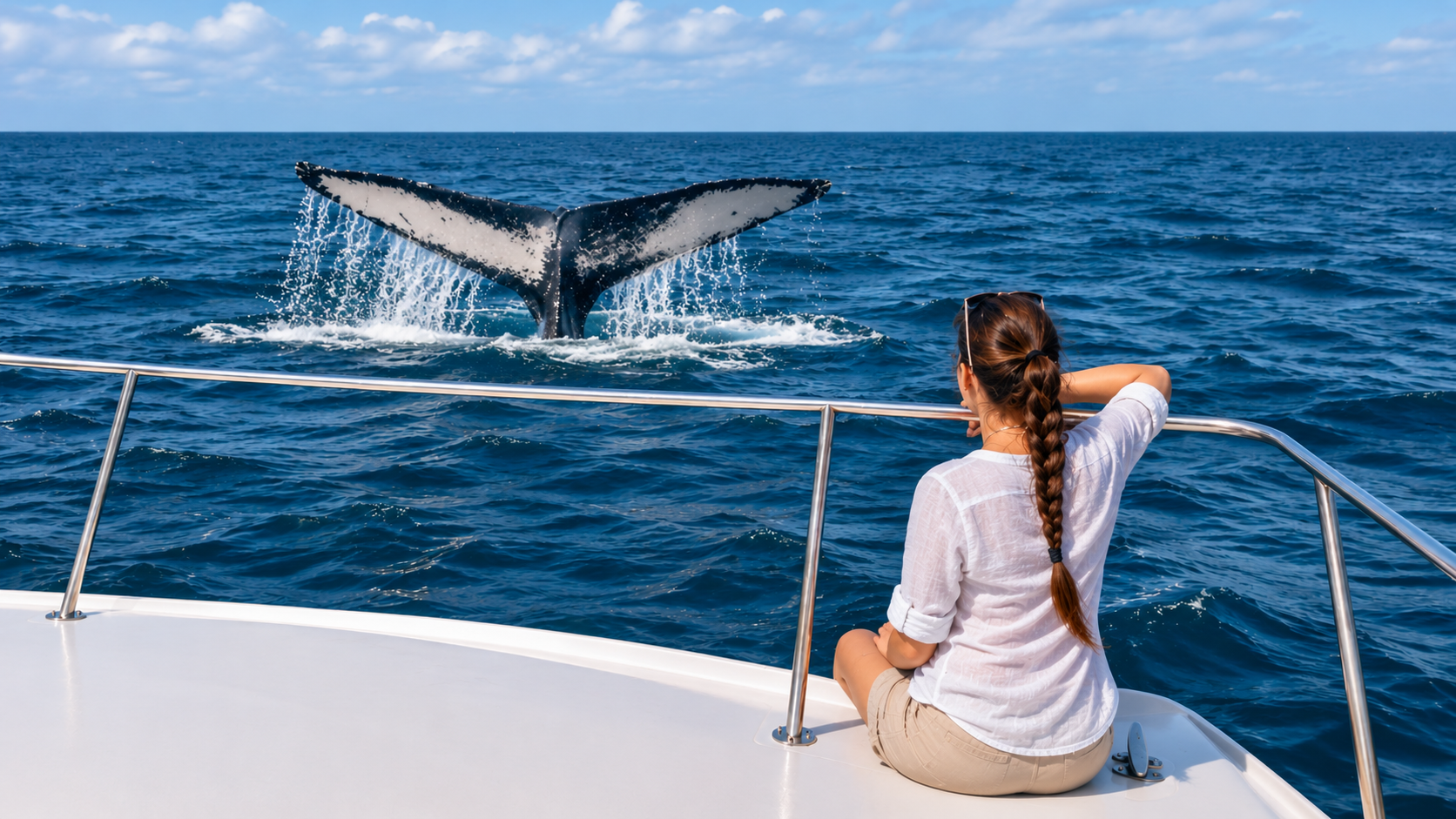
Flying to Sri Lanka for Whale Watching is an exciting way to experience the island’s marine wildlife. Sri Lanka is known for its blue whales, sperm whales and dolphins, with organised boat excursions available from different coastal destinations.
However, choosing the right travel season is important. The best time for whale watching depends on whether visitors plan to explore the southern or eastern coast.
When Is the Best Time for Whale Watching in Sri Lanka?
Whale Watching in Mirissa: December to March
Mirissa is one of Sri Lanka’s best-known whale-watching destinations.
Located along the southern coast, it offers boat excursions into deeper waters where blue whales and other marine mammals may be encountered.
The main season generally extends from November to April, with December to March particularly popular.
Boat tours usually depart early in the morning, when conditions may be more suitable.
Whale Watching in Trincomalee: June to August
Trincomalee offers an alternative whale-watching destination on Sri Lanka’s eastern coast.
Its main marine wildlife season generally falls between May and September, with June to August often offering favourable conditions.
Blue whales and sperm whales may be encountered in the offshore waters, although their presence varies.
What About Whale Watching in Kalpitiya?
Kalpitiya, on Sri Lanka’s northwestern coast, is especially known for dolphin watching.
Large groups of spinner dolphins are sometimes observed in the surrounding waters.
Whales may also be encountered, but Kalpitiya is generally a stronger choice for visitors particularly interested in dolphins.
Which Airport Should You Fly Into?
Most international travellers arrive at Bandaranaike International Airport (CMB), near Colombo.
This is the main international gateway for visitors travelling to Sri Lanka’s whale-watching destinations.
From the airport, travellers can continue by road towards Mirissa, Trincomalee or Kalpitiya.
Should You Choose a Morning or Evening Arrival?
Flight arrival time can affect the first day of a whale-watching holiday.
A morning arrival may provide more time to continue towards the chosen coastal destination.
For more practical flight planning, explore Flight Tickets to Sri Lanka.
How Many Days Should You Allow for Whale Watching?
Spending at least two nights near the chosen departure point is a practical option.
This allows time for an early-morning excursion without rushing directly from the airport.
Travellers whose main goal is whale watching may prefer an additional day in case poor weather causes cancellations.
What Should Visitors Know Before Booking a Whale-Watching Tour?
- Checking the weather and sea forecast before departure.
- Confirming the excursion’s duration and cancellation arrangements.
- Wearing a properly fitted life jacket.
- Carrying sun protection and drinking water.
- Preparing for possible seasickness.
- Avoiding operators that promise guaranteed whale sightings.
Wildlife encounters should always prioritise the animals’ natural behaviour and safety.
Which Season Is Better for International Travellers?
December to March: Choose Mirissa for whale watching combined with Sri Lanka’s southern beach destinations.
June to August: Consider Trincomalee for eastern coastal scenery and marine wildlife excursions.
November, April, May and September: These transitional periods may offer opportunities, but conditions can be less predictable.
October: Neither coast should be treated as a dependable whale-watching destination without checking current local conditions.
Travellers planning a wider coastal holiday can explore Best Beach Destinations for information about Sri Lanka’s different beaches.
Conclusion
Mirissa is generally the stronger option from December to March, while Trincomalee is particularly suitable from June to August. Kalpitiya offers another option for travellers interested in dolphins.
By comparing flight arrival times, allowing flexibility for weather and choosing responsible tour operators, visitors can plan a more comfortable marine wildlife experience.
Flying to Sri Lanka for Whale Watching can be a memorable part of an island holiday, provided travellers understand that encounters with wild animals are never guaranteed.